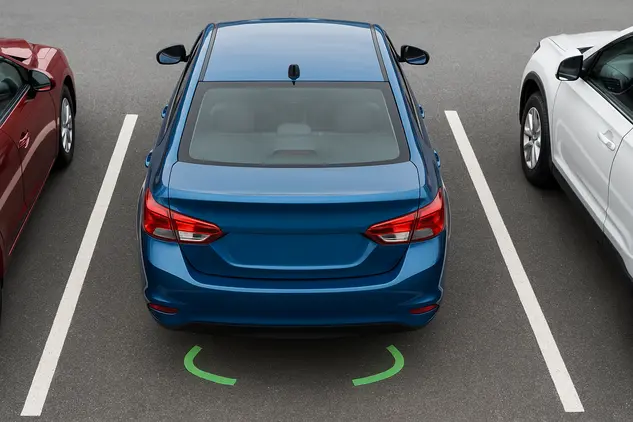
Spend 15 minutes in any busy parking lot and you’ll notice two kinds of drivers. Some pull straight into a space and worry about backing out later. Others slow down, scan their surroundings, signal early, and back in deliberately so leaving is effortless. That tiny choice says more about mindset than it does about driving style—and it can teach us a lot about success.
This article unpacks what back‑in parking reveals about long‑term thinking, planning, and risk management, then turns those insights into practical habits you can apply to your driving, your work, and your life.
What back‑in parking actually signals
Let’s clear something up: backing into a space doesn’t make you successful. But it does reflect a bundle of behaviors that often show up in high performers:
– Long‑term orientation: trading a few extra seconds now for a safer, faster exit later.
– Proactive planning: visualizing the exit before committing to the entry.
– Risk awareness: setting up a scenario that reduces blind spots and surprises.
– Systems thinking: arranging the present to make the future easier.
– Consideration for others: leaving in a controlled, predictable way eases congestion.
Seen together, those behaviors create compounding advantages. When you front‑load effort in small moments, you prevent headaches later. That’s true behind the wheel and in your career.
Is back‑in parking safer?
Safety experts and many fleet policies favor reverse parking because you use the best visibility when you need it most—while exiting into moving traffic and pedestrians. Backing in requires more focus up front, but it means you drive forward when leaving, with a clear view of cross‑traffic. Think of it as moving the hard part to the moment when you’re most attentive, instead of when you’re tired or distracted and eager to go.
Success traits reflected in back‑in parking
1) Long‑term thinking and delayed gratification
– The micro‑tradeoff: You invest an extra 10–20 seconds now to save time and reduce risk later. That’s the same pattern behind effective saving, training, and learning.
– Daily parallel: Draft the agenda before a meeting, prep ingredients before cooking, outline before writing. Your future self benefits.
2) Proactive planning
– Before backing in, you scan for pedestrians, choose the right angle, signal early, and commit to a smooth arc. In work, that looks like identifying stakeholders, dependencies, and blockers before you start executing.
– Pro tip: Always ask, “How do I want to exit this?” when you’re about to enter any commitment (a project, a contract, a parking space).
3) Risk management
– Back‑in parking lowers the chance of reversing into cross‑traffic when leaving. In business, the equivalent is building “exit ramps” into projects—milestones, budgets, and kill criteria that prevent small issues from becoming big losses.
4) Systems thinking
– The choice to back in turns your next step (leaving) into a one‑move action. That’s a system. Translate it to your desk: leave tomorrow’s first task open and visible, with resources ready. Reduce startup friction.
5) Skill stacking and confidence
– Reverse parking rewards practice: mirror usage, slow steering inputs, spatial awareness. The more you do it, the easier it feels. The same compounding happens with presentation skills, negotiation, or coding. Skill begets confidence; confidence begets better decisions.
6) Consideration and courtesy
– A planned exit reduces bottlenecks and surprises for others. In leadership, planning your communications and handoffs shows the same respect for your team’s time and attention.
7) Composure under pressure
– Backing in requires calm, patience, and the willingness to reset if your angle isn’t right. High performers protect calm as a competitive advantage.
How to learn back‑in parking quickly (practical, safe steps)
If you’re new to it, learn in a calm, controlled environment. The goal is smooth, predictable movements and constant awareness.
Step‑by‑step practice
– Find an empty lot: Set up two cones or use painted lines to simulate a space.
– Start wide and slow: Signal early, position your vehicle a few feet past the space so the rear has room to pivot.
– Choose your reference points: Use mirrors and your backup camera (if available) to align with the far line. Avoid staring at one spot—scan mirrors, camera, and over your shoulder.
– Commit to a smooth arc: Turn the wheel slowly. Small corrections beat big, jerky ones.
– Pause to reassess: If your angle is off, stop. Pull forward to reset the approach instead of forcing it.
– Final check: Before you stop, ensure you’re centered and straight. Leave enough space to open doors safely.
Safety habits that make a big difference
– Don’t rush the setup: Most errors happen in the first second. Take a breath; go slow.
– Keep scanning: Pedestrians—especially small children—can appear suddenly behind vehicles. Check mirrors, camera, and over your shoulder.
– Use technology wisely: Backup cameras and sensors are aids, not substitutes.
– Mind sightlines: Avoid spaces beside oversized vehicles that block visibility if you can choose a clearer line of sight.
– Communicate intentions: Signal early. If someone is waiting, hand gesture your plan; courtesy reduces confusion.
Turn the “back‑in” mindset into everyday performance
The real win is transferring this mindset from the parking lot to your calendar and to‑do list. Here’s how to build the same success traits into daily work.
Front‑load effort where it compounds
– Write tomorrow’s top three tasks before you end your day. Leave the first file or tab open so you can start in 10 seconds.
– Outline first, then draft. You’ll write faster and edit less.
– Pre‑stage resources: charge devices, lay out gym clothes, prep ingredients. Remove start friction.
Plan the exit while you enter
– Projects: Define the “done” state, decision gates, budget stops, and success metrics before kickoff.
– Meetings: Clarify the objective, agenda, and owner of next steps upfront. End five minutes early to summarize.
– Commitments: Ask, “Under what conditions would we pause or stop?” Write it down.
Practice risk‑aware execution
– Pre‑mortems: Spend five minutes imagining what could go wrong and how you’d respond.
– Single‑point‑of‑failure check: If one person or tool disappears, what breaks? Add backups.
Build systems that make the next step easier
– Two‑minute reset: Before you leave a task, set up the next action—open the doc, paste the prompt, drop the link.
– SOPs and checklists: For anything repeatable, standardize it once. Future you will thank you.
– Environmental design: Put the thing you want to do in your way. Hide the thing you want to avoid.
Protect calm and attention
– Decision cadence: Use short, regular check‑ins to adjust course instead of big, stressful pivots.
– Micro‑pauses: When emotions spike, take two slow breaths. Better choices follow.
– Single‑tasking blocks: 25–50 minutes focused, then a short break. Context switches are costly.
Respect the flow of others
– Status updates: Be clear, brief, and proactive. Give people what they need before they have to ask.
– Handoffs: Provide context, links, and deadlines. Make the “exit” clean for the next person.
Headlines and angles that work for Google Discover
– What Back‑In Parking Reveals About Your Success Mindset
– Is Reverse Parking Safer? The Habit That Signals Long‑Term Thinking
– How to Learn Back‑In Parking Fast (and Use the Same Skill at Work)
Use clear, curiosity‑driven headlines that promise a takeaway, avoid clickbait, and deliver value. Pair with an original, high‑quality image (a driver calmly backing into a spot with mirrors visible) and a meta description like: “Reverse parking isn’t just a driving skill—it’s a mindset. Learn the habits it reveals and how to apply them for safer driving and higher performance.”
Common objections (and thoughtful answers)
– “It takes longer.” True, a little—up front. But it often saves time (and stress) on exit, when lots are busier and you’re more rushed.
– “I’m not good at it.” That’s exactly why it’s worth practicing. Ten minutes in a quiet lot once a week rapidly improves confidence.
– “Not every spot allows for it.” Absolutely. Use judgment. The point is the mindset: plan, reduce risk, and set up an easy exit whenever possible.
Quick checklist: the back‑in success loop
– Pause and scan before you act.
– Visualize the exit; plan the entry.
– Go slow; make small, deliberate adjustments.
– Reset rather than force a bad angle.
– Leave the next step easy—for you and others.
Stronger conclusion: It’s not about parking. It’s about how you move through the world.
Back‑in parking is a tiny, teachable skill. But the deeper win is adopting the habit it represents: doing a little more now to make later safer, faster, and better for everyone around you. High performers aren’t just faster—they’re more intentional. They engineer smoother exits before they enter. They respect risk without fearing it. They set up tomorrow while they finish today.
If you want to borrow one habit from consistent top performers, let it be this: take a beat, plan the exit, then commit with calm precision. Start with your car. Then bring that same discipline to your next project, your next meeting, your next decision. Reverse in today so you can drive forward tomorrow—confidently, safely, and with momentum that compounds.
7‑day micro‑challenge
– Day 1–2: Practice back‑in parking twice in a quiet lot. Go slow, focus on scanning.
– Day 3: Before you end work, set up tomorrow’s first task (doc open, links ready).
– Day 4: Run a five‑minute pre‑mortem on an active project.
– Day 5: Create one checklist for a recurring task.
– Day 6: Do one thoughtful handoff (context, links, deadlines) to make someone else’s next step easy.
– Day 7: Review what felt easier. Keep the winners; refine the rest.
Do this for a week, and you’ll feel the difference—in the lot, and everywhere else you choose to lead.